Organic Cocoa in Ghana: When Farmers Can Grow Food On Their Land Again
17 of Sep 2026There is a lot of debate about whether Ghana's regulated cocoa system is flexible enough to support smaller supply chains like organic cocoa. That debate matters. But for us, the real test is not what gets said in conference rooms or reports. It is what happens on the ground, working with farmers, moving cocoa through the system, and trying to make organic production work in practice.
-
Ghana’s cocoa sector was built to move enormous volumes efficiently. Organic cocoa, by comparison, is still a small fraction of national production. That means those of us working in organic are effectively asking a system designed for hundreds of thousands of tonnes to create space for a few thousand that require entirely different handling.
Organic cocoa has to stay segregated. Warehouses have to be suitable. Transport and handling have to protect its integrity. Staff need to understand certification requirements. Traceability has to hold from farm to export. None of this is simple when the existing infrastructure was built for large-scale conventional cocoa.
And yet, we are seeing progress. The Cocoa Marketing Company and other governmental institutions in Ghana’s cocoa sector have shown real willingness to understand what organic requires and to adapt. Their staff has gone through organic training, learned certification requirements, and implemented organic procedures inside infrastructure that was never designed for it. That deserves recognition.
There is still work to be done. Warehousing and the ability to hold organic cocoa at origin, with proper segregation, over extended periods remains a gap. But institutions choosing to engage, learn, and build solutions is significant in itself.
-
The most important change is happening on the farm
For us, the strongest argument for organic cocoa is not the certification, the paperwork, or even the premium. It’s what happens to the land and to the people living on it. If you spend enough time in cocoa-growing communities and you notice something uncomfortable: some farmers grow cocoa on one part of their land, but the food their families eat comes from somewhere else.
That should prompt a simple question — why would a farmer not want to eat food grown on the same land where they grow cocoa?Farmers know their land better than anyone. They know what’s been sprayed, what inputs have gone in, what still grows well and what does not anymore. If farmers themselves are uneasy growing food alongside their cocoa because of the chemical inputs used, that is something the industry should not look past. Especially in rural communities where families depend on fresh food grown close to home, without the luxury of refrigeration or long-term storage.
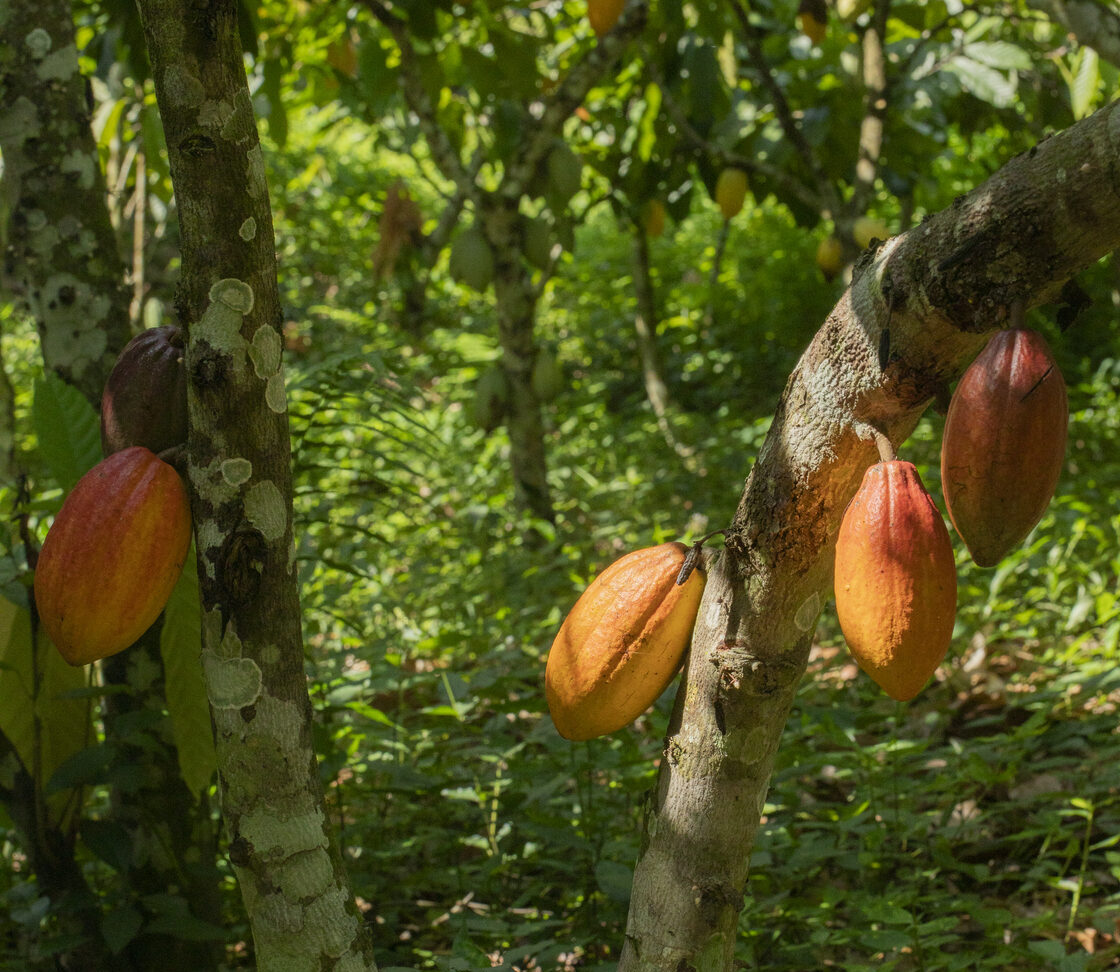
Cocoa farms were never meant to be isolated monocultures. They were part of a wider system, alongside plantain, cassava, yam, vegetables, and fruit trees. Generating income, but also feeding the family.
-
This is one of the changes that has affected us most in our years working with organic farmers: We are seeing food production return to the same land where cocoa is grown. Crops that farmers told us had become difficult to grow under intensive chemical farming are appearing again. Farmers are growing food for their families among and around their cocoa.
That, to us, is what sustainability should look like. Organic cocoa should not just be about producing a certified bean sold at a premium to a buyer in Europe, America, Asia, or the Middle East. If the only benefit shows up at the point of export, we have missed something. The benefit should start with the farmer.
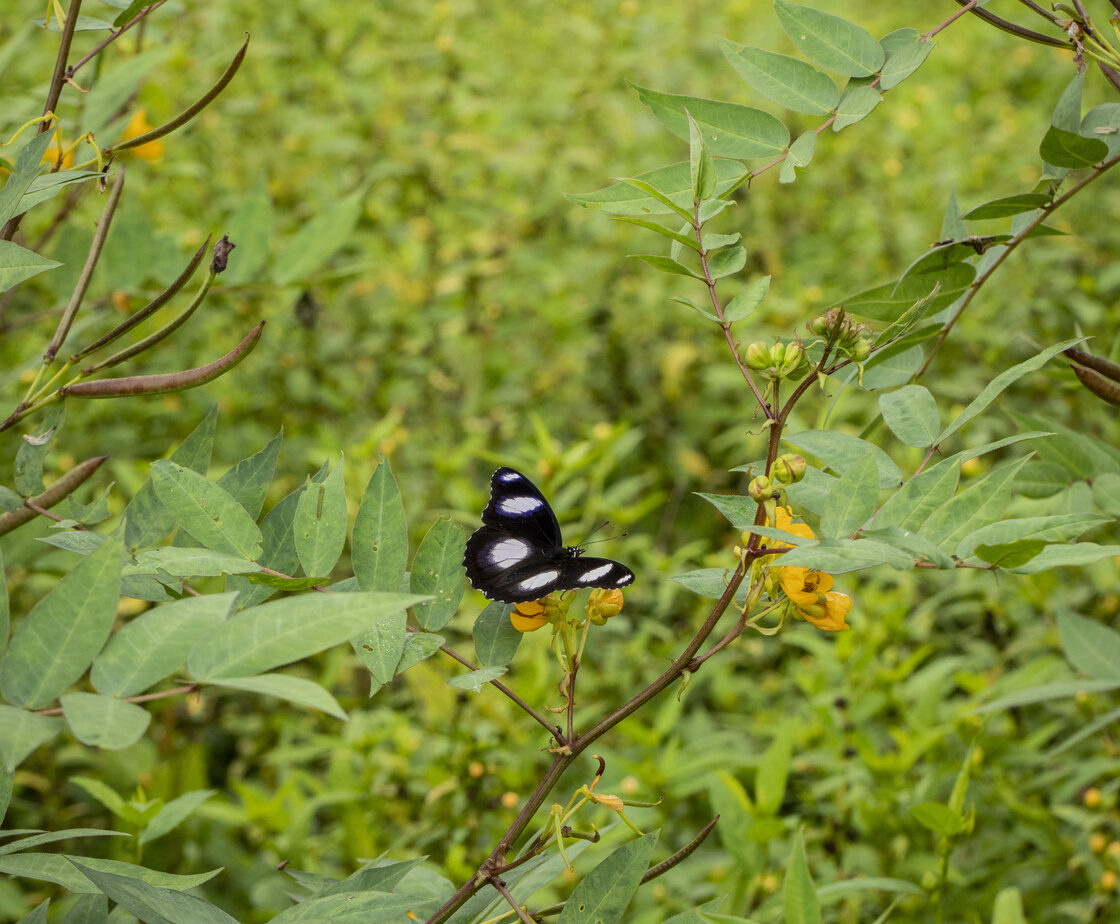
Visible in the soil, in the biodiversity, in the food growing on the farm, and, most importantly, in a farmer being comfortable eating what comes from his or her own land.
-
Building an enabling environment for organic cocoa farming
Building an enabling environment for organic cocoa farming
We should not romanticise the transition. Organic farming brings real costs: approved inputs can be more expensive and harder to source, farmers need additional training, certification adds administrative weight, and segregation adds logistics costs.
This is why government and industry support matters. We cannot ask farmers to carry the entire financial burden of this transition alone. Where government institutions are making organic inputs more accessible, and where the sector is adapting its systems to accommodate organic farmers, that should be encouraged. Policy has to work with the farmer, not simply impose requirements on them.
There is still a long way to go. Organic volumes in Ghana remain small. Warehousing and segregation need further development. Organic inputs need to become more accessible. And as volumes grow, the sector will need dedicated systems to move organic cocoa more efficiently.
But progress rarely happens all at once. It begins when institutions are willing to listen, and it continues when regulators, farmers, cooperatives, exporters, certification bodies, and buyers solve practical problems together. We should keep challenging the system where change is needed. But we should also recognise when it responds.
Because ultimately, the success of organic cocoa in Ghana will not be measured only in tonnes exported. It will be measured by what happens in the communities producing it. Perhaps the simplest measure of progress is this: can the farmer grow cocoa, grow food, and confidently feed his or her family from the same piece of land?
If the answer increasingly becomes yes, we are moving in the right direction.
Photo credit: Maria Maraki